
- Folder Internal News
- Views 52
- Last Updated 22/03/2026
The training workshop on “Foodborne Outbreak Investigation and Food Hygiene Monitoring Practices” concluded successfully, delivering a series of practical and highly valuable sessions. Beyond its role as a professional training program, the workshop also served as an open platform for meaningful exchange among experts, policymakers, and practitioners engaged in food safety management at both central and local levels.
In the context of food safety incidents continuing to occur across provinces and cities, enhancing the capacity for investigation, sampling and testing to identify causes, and strengthening preventive measures are urgent tasks. Therefore, the content presented at the workshop directly addressed the practical issues currently faced by participating agencies.
The presentations focused on approaches to investigating food safety incidents and food poisoning cases, from the collection of initial information in epidemiological and food investigations to sampling and laboratory testing activities. Specific case studies from Viet Nam and Canada, along with sampling techniques, testing methods, and interpretation of results, helped participants gain a clearer understanding of the entire process of handling a food poisoning case from start to finish. Some notable presentations at the workshop included:
- Canada’s Foodborne Illness Outbreaks Response protocol (FIORP). Presenters: MSc. Penelope Kirsch and Dr. Amado Antonio, Indo-Pacific Agriculture and Agri-Food Office (IPAAO), Canadian Food Inspection Agency.
- Food safety and risk communication: Identifying and clarifying stakeholder needs. Presenter: MSc. Penelope Kirsch, IPAAO.
- An acute poisoning case in Viet Nam caused by mixing alcoholic beverages with acetonitrile. Presenter: MSc. Nguyen Thi Hong Ngoc, National Institute for Food Control (NIFC).
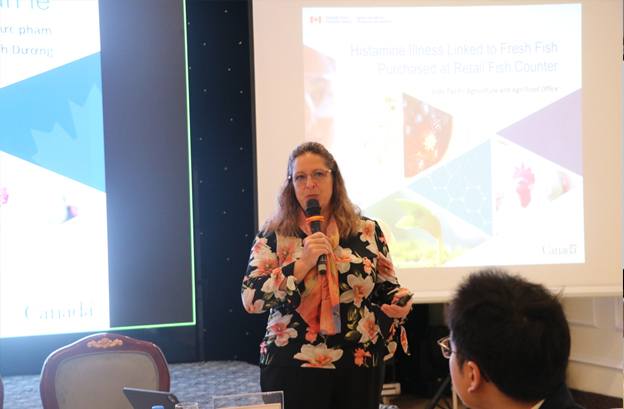
- Histamine poisoning from fresh fish purchased at a retail counter. Presenter: MSc. Penelope Kirsch, IPAAO.
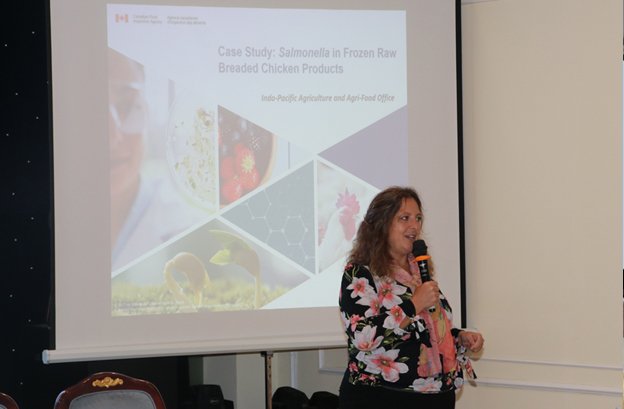
- Case study: Salmonella in raw frozen breaded chicken products. Presenter: MSc. Penelope Kirsch, IPAAO.
- Sampling and testing to determine the cause of food poisoning. Presenter: MSc. Ta Thi Yen, NIFC.
- Food Safety and hygiene monitoring ATP methods. Presenter: MSc. Nobuyoshi Sato, Kikkoman Biochemifa Company (KBC).
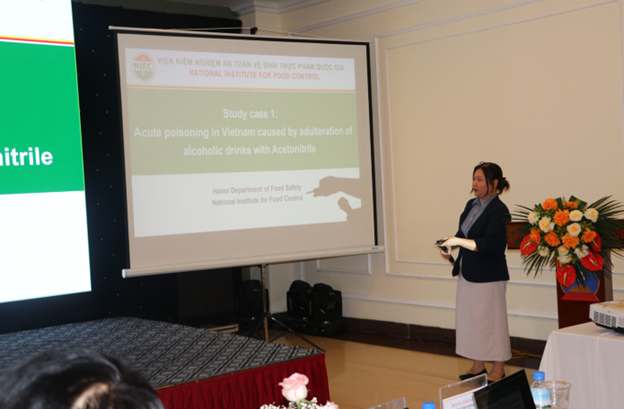
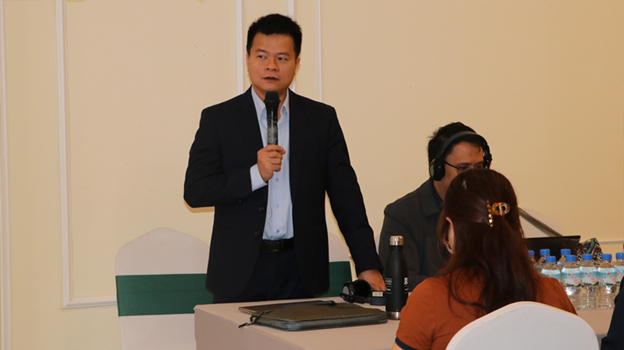
MSc. Nguyen Thi Hong Ngoc delivering her presentation
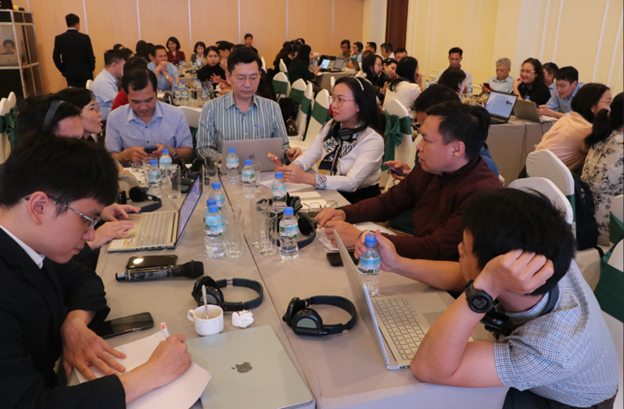
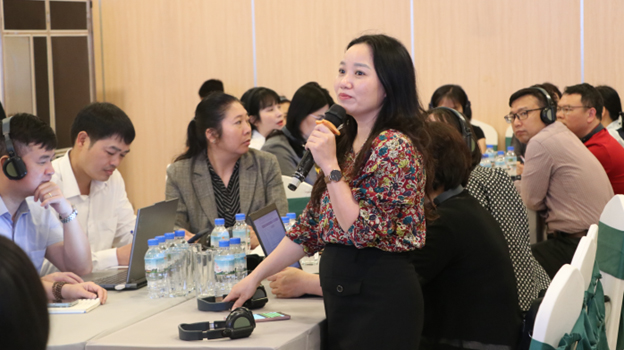
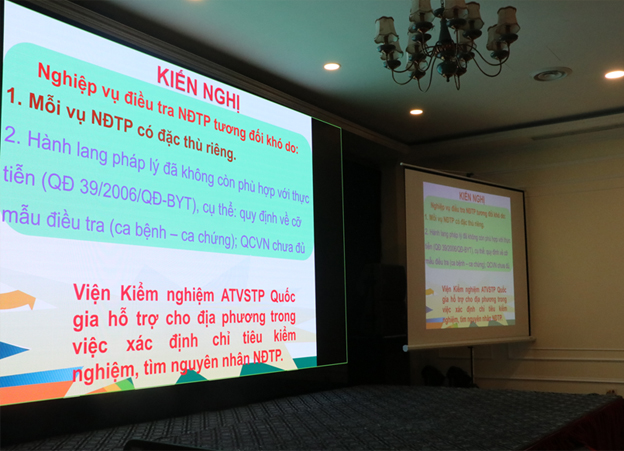
A highlight of the workshop was the discussion sessions. Many real-life situations were raised, ranging from mass food poisoning incidents to household food poisoning cases. Participants analyzed these situations together, shared experiences, and proposed appropriate response measures. These exchanges not only helped clarify knowledge but also closely reflected the realities of work in each locality. In addition, the workshop helped strengthen connections among units, making coordination in handling food safety incidents more effective. At the workshop, delegates also provided comments and recommendations for revising and harmonizing Ministry of Health documents related to investigation activities and sampling in food poisoning cases.
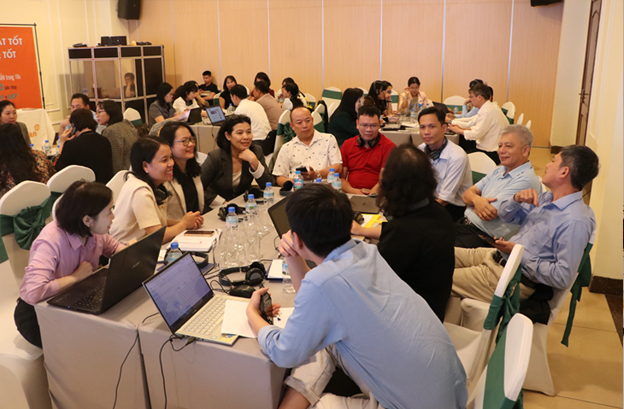
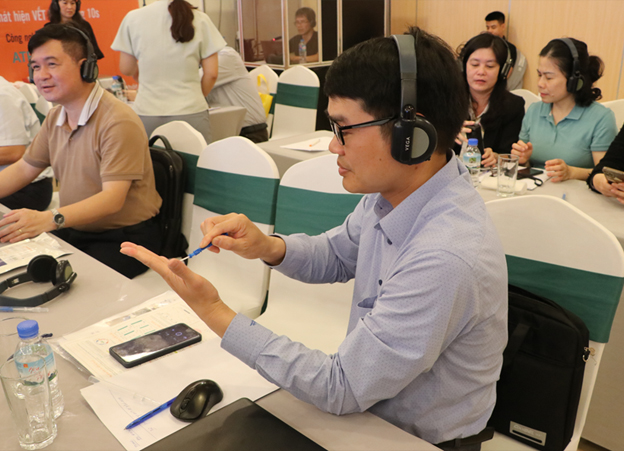
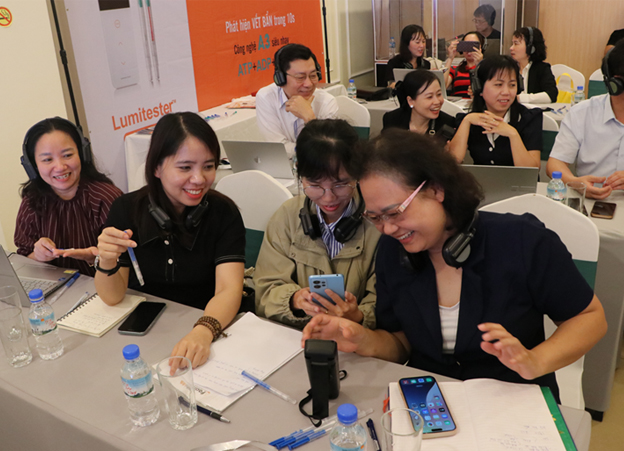
Participants divided into groups to discuss local food poisoning cases
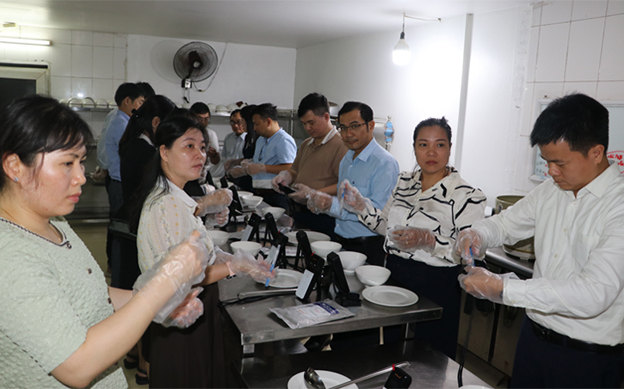
In addition to the procedures for investigating food poisoning cases and the theory of the ATP hygiene monitoring method, workshop participants also had the opportunity to practice ATP hygiene monitoring in the hotel kitchen, on food storage and processing utensils, and on the hands of the baker.
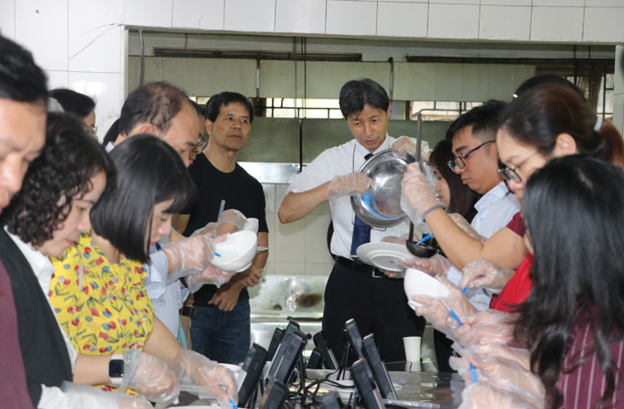
MSc. Nobuyoshi Sato (Japan) demonstrating hygiene monitoring procedures using the ATP method
Throughout the three-day workshop, the Organizing Committee noted the serious and active participation of the delegates. The knowledge and experience shared during the workshop are expected to continue being disseminated and applied in practice, thereby contributing to improved effectiveness in ensuring food safety in the coming period. Nearly 100% of participants rated the workshop program as good or very good, and the presenters also received excellent praise
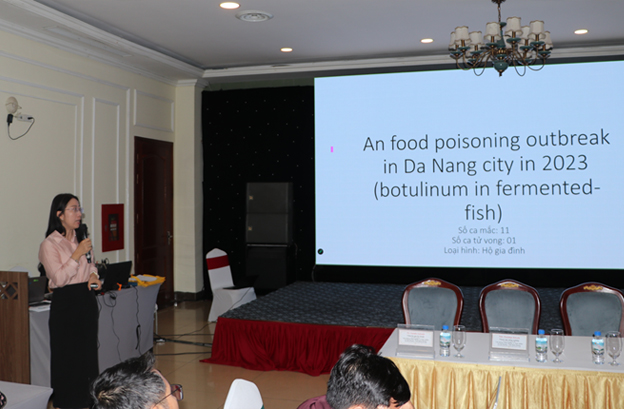
A representative from Pasteur Institute Nha Trang presenting a food poisoning case report
Although the workshop has finished, the knowledge and lessons learned will continue to prove valuable in the daily work of food safety officers. During the certificate presentation and closing remarks, Assoc. Prof. Dr. Tran Cao Son, Deputy Director of the National Institute for Food Control, emphasized that the NIFC will continue to accompany and support local-level units by strengthening training courses related to the investigation and handling of food poisoning cases and the proper sampling of food. This will gradually enhance the capacity to accurately determine the causes of incidents and to implement timely and effective response measures. It is also an important foundation for building a synchronized, proactive, and science-based food safety surveillance system, strengthening intersectoral coordination from the central level to localities, and contributing to the reduction of food poisoning risks and the protection of public health
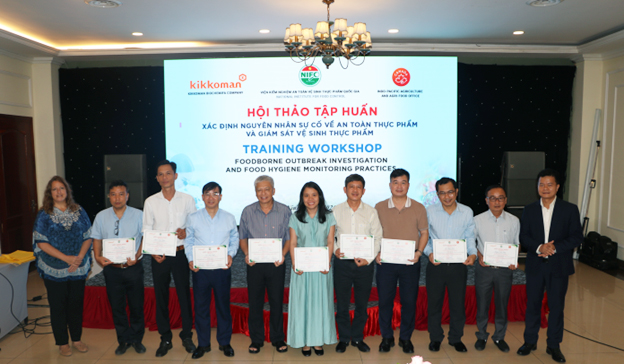
The Organizing Committee presenting certificates of completion to the participants
Prepared by: Ta Thi Yen - Department of Science, Training and International Cooperation
Some photos from the workshop: