
- Folder Internal News
- Views 44
- Last Updated 18/03/2026
To strengthen capacity for foodborne outbreak investigation and to improve the effectiveness of food hygiene monitoring, the National Institute for Food Control organized a training workshop in Ninh Binh Province from March 18 to 20, 2026, with the participation of domestic and international experts.
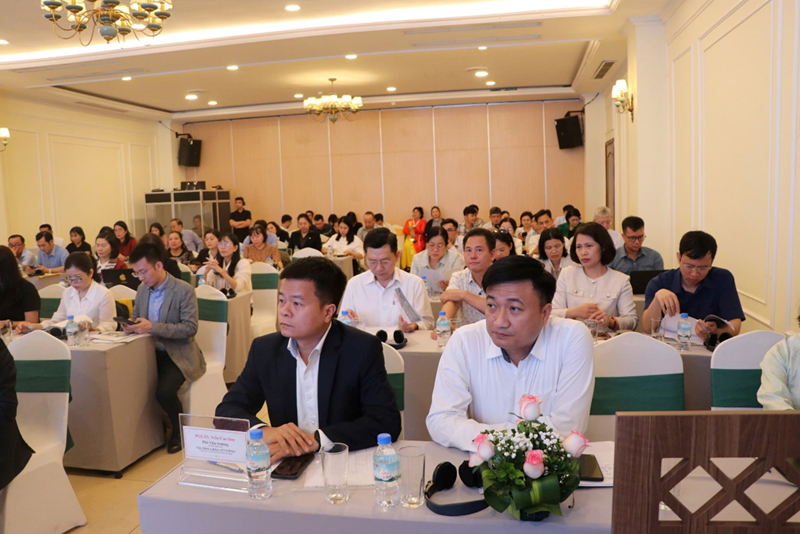
On the morning of March 18, 2026, at Hoang Son Peace Hotel in Ninh Binh Province, the Training workshop on Foodborne Outbreak Investigation and Food Hygiene Monitoring Practices officially opened with the participation of Vietnamese and international delegates. The workshop was chaired by the National Institute for Food Control in coordination with the Indo-Pacific Agriculture and Agri-Food Office (IPAAO, Canada) and Kikkoman Biochemifa Company (Japan).
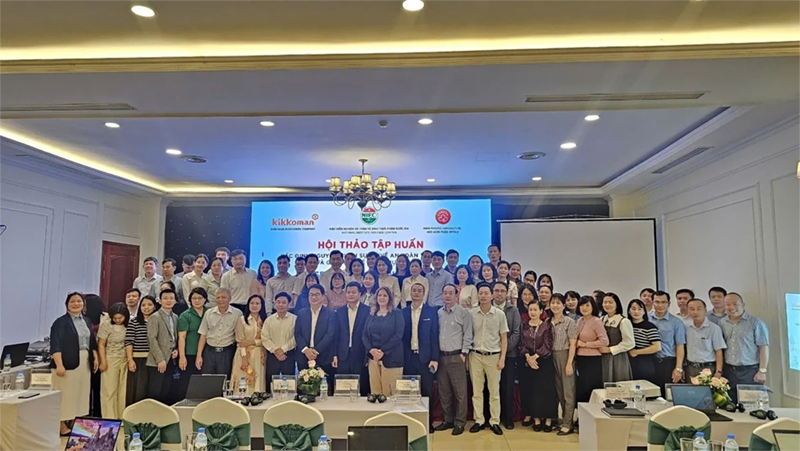
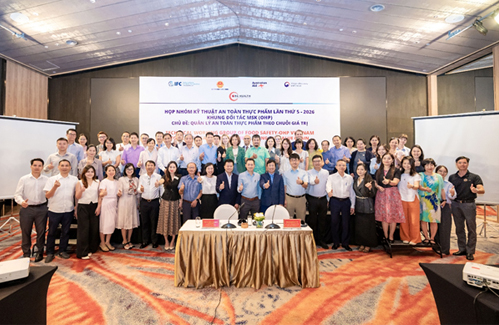
The organizing committee and delegates taking a commemorative photo
Attending the training workshop were representatives of management agencies, research institutes, provincial Departments of Health, local food safety sub-departments, and domestic and international experts. In his opening remarks, Assoc. Prof. Dr. Tran Cao Son emphasized the importance of strengthening capacity for the investigation and handling of food safety incidents and of applying modern investigative and monitoring methods aligned with international practices. After more than 20 years of implementing regulations on food poisoning investigation and the collection of food and clinical samples in food poisoning cases under Decision No. 39/2006/QD-BYT and Decision No. 5327/2023/QD-BYT, the workshop offered an opportunity to review how these regulations are being applied in practice under the current two-tier local government system. Experts from Canada also presented in detail on emergency response procedures for food safety incidents, while experts from Japan introduced ATP-based hygiene control methods. The workshop therefore created an opportunity for delegates to meet, exchange ideas, discuss practical issues, and share experience to improve the effectiveness of investigating and identifying the causes of food poisoning incidents.
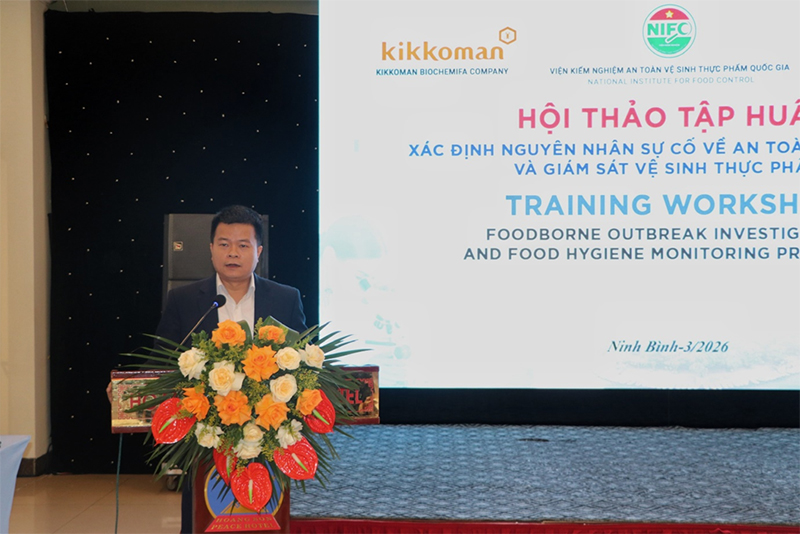
Assoc. Prof. Dr. Tran Cao Son, Deputy Director of the National Institute for Food Control, delivering the opening remarks
At the training workshop, MSc. Bui Duc Lap, Deputy Director General of the Vietnam Food Administration, delivered a directive speech and outlined orientations for improving the effectiveness of state management of food safety in the new context. Food safety is one of the major issues receiving special attention from the Party, the State, and the Government. Many important guidelines and policies have been issued to strengthen the effectiveness and efficiency of state management in this field, notably Directive No. 17-CT/TW of the Secretariat. In the coming period, food safety assurance should continue to focus more strongly on prevention, early detection, and the timely handling of food safety risks. To achieve this goal, alongside improving mechanisms and policies, it is crucial to strengthen the capacity of officials directly engaged in inspection, examination, monitoring, and incident investigation
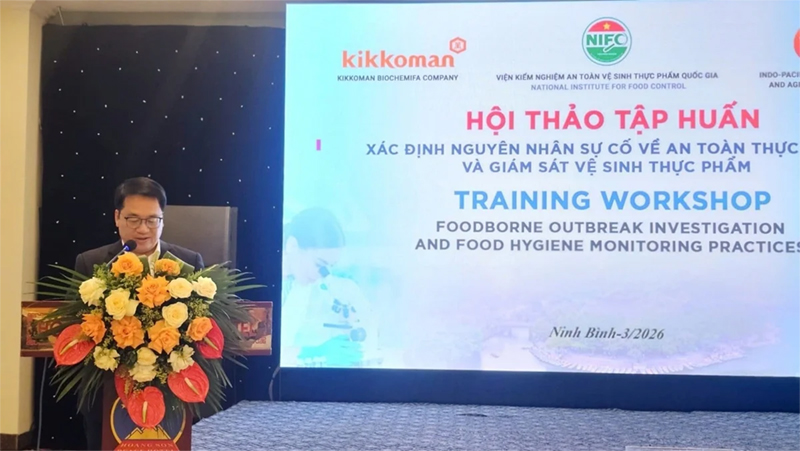
MSc. Bui Duc Lap, Deputy Director General of the Vietnam Food Administration, delivering directions at the workshop
The training workshop took place over three days (March 18–20, 2026) and covered key technical topics such as incident response procedures, analysis of practical case studies in Canada and Vietnam, ATP methods, hands-on practice, and professional discussion sessions. On March 18, representatives of IPAAO (Canada), Ms. Penelope Kirsch, MSc., and Dr. Amado Antonio delivered presentations and shared experience on the FIORP (Food Incident and Outbreak Response Protocol) within Canada’s food safety management system. According to the experts, FIORP is an inter-agency protocol developed to ensure effective coordination among relevant authorities in detecting, assessing, and responding to food safety incidents. The protocol clearly defines the role and responsibilities of each agency throughout the entire incident management chain, from receiving initial information and assessing risks to implementing control measures and risk communication. The experts also shared practical examples from Canada on the application of FIORP in handling foodborne outbreak cases, thereby illustrating how the system operates effectively in real-life situations
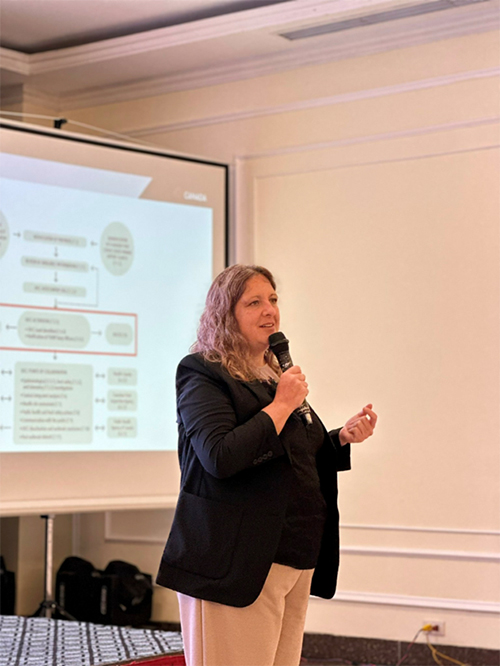
MSc. Penelope Kirsch, MSc., Agricultural Counsellor of IPAAO
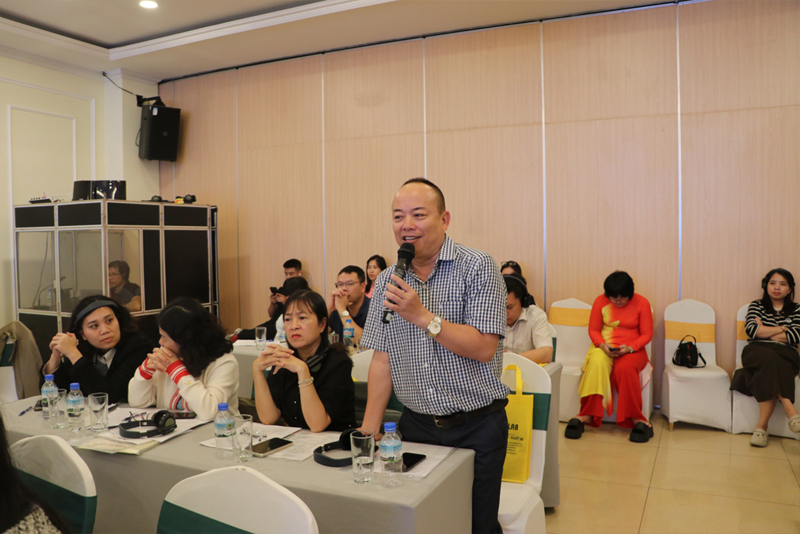
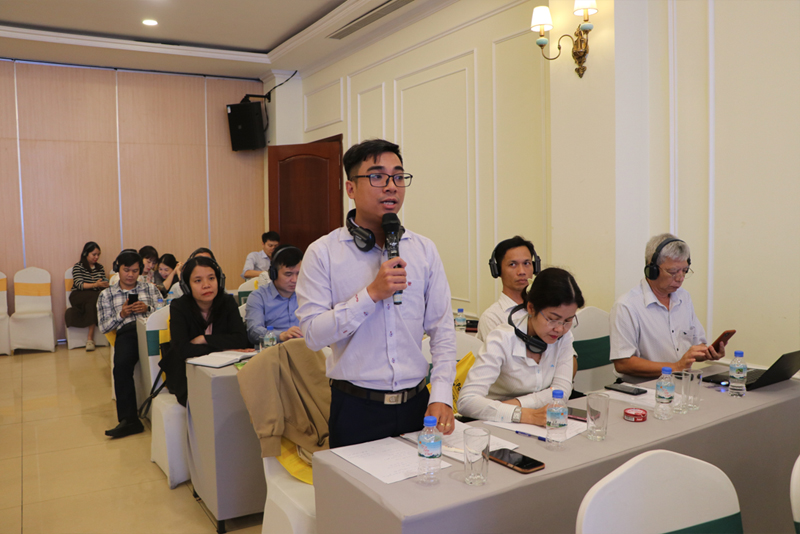
Delegates actively engaged in discussion and shared experience to resolve difficulties encountered in food poisoning investigations and sample collection. With the participation of international experts, food safety regulators, and food testing units, the workshop was considered to have provided useful information that will support Vietnam in further improving its response procedures for food safety incidents in general, and food poisoning incidents in particular, in a more systematic, risk-based manner and in line with international practices.
Prepared by: Ta Thi Yen, Department of Science, Training and International Cooperation
Some photos of the training workshop